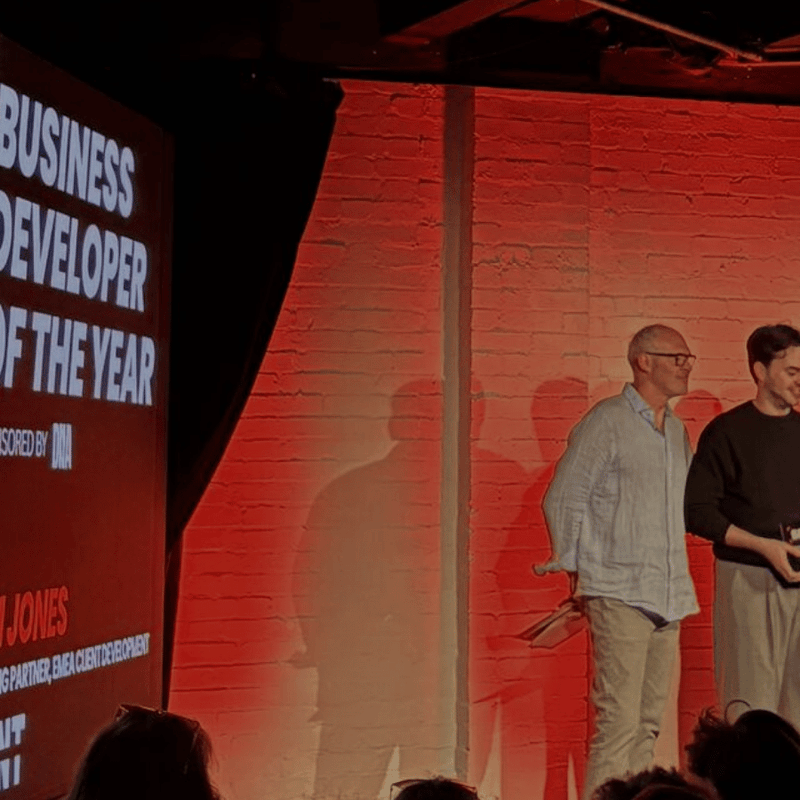
The UK events industry is booming

On paper, UK events are having a great year. The UK's 'experience economy' is valued at £140bn a year and is forecast to grow another 5% in 2026. It has grown by 20% a year since 2021. Globally, immersive experiences are projected to grow from £98bn to £350bn by 2030.
All of that growth has to be delivered by someone. The account directors who win and keep the clients. The producers and production managers who turn a brief into a build. The event marketers and sponsorship teams who fill the room and help pay for it.
Right now, those people are hard to find. And the reasons why matter if you're the one trying to hire them.
Where the pressure really sits
The clearest data comes from ESSA, the Event Supplier and Services Association, whose members supply the staging, AV, structures and services behind most UK events. In its first Stronger Together survey, published in December 2025, 73% of members said recruitment had been challenging over the previous 12 months. 88% said that was mainly down to a shortage of skilled candidates.
That starts as a supply chain problem, but it doesn't stay there. When your AV partner or build contractor is short-staffed, your production managers and technical project managers feel it first. More chasing, less margin for error, more problems solved on site late at night. Right now, one of the most valuable skills in those roles is delivering a great show through a stretched supplier base.
Retention is the harder conversation. 87% of ESSA members named work-life balance as their biggest retention issue, and fewer than a third offer mental wellbeing support such as an Employee Assistance Programme. Anyone who has worked agency-side through a busy live season will recognise that picture. Senior event managers and producers carry most of that load, and they're the hardest people to replace when they walk.
A funding cut that lands on your commercial team
On 4 August, over 214 industry organisations warned that the UK risks losing its place in the international business events market after the government cut VisitBritain's Business Events Growth Programme.
The programme had delivered a 35:1 return, turning less than £1.8m of government funding into £60.6m of direct economic return, and has brought 167 business events to UK cities since it began in 2018. The UK events economy is worth £33.6bn, and business-event visitors make up 17% of all UK visits. Yet the UK is now the only major economy without a fully funded national business events team, trailing Ireland, France, Germany, Spain and around 20 other European competitors.
If you deliver conferences, congresses or incentive programmes, that means less national backing when you bid for international work. More of the job falls on your own people. Business Directors and Commercial Directors who can build a pipeline without that support, and sponsorship teams who can bring in partner revenue, have just become more valuable.
What 'good' looks like in a hire now
Clients want proof. London Experience Week's central theme this year was ROX, or Return on Experience: a push to build a proper framework for proving what live experiences are worth. Organiser James Wallman's argument is that when everything is available instantly, what matters is what's memorable.
Memorable still has to show up in the client's report, though. That's shifting what agencies need from Client Services Directors, Account Directors and Event Marketing Managers. The people who can walk a client through outcomes, and back them up, are the ones keeping accounts and growing them.
Judgement about technology. At InnovateX, the industry's new forum, which held its first event in March, speakers warned against leaning on 'smarter systems' at the expense of richer human experiences. For producers and technical project managers, the skill in demand is knowing when tech makes an experience better and when it gets in the way.
Sustainability you can deliver. Sustainability has moved from a line in the pitch deck to a job title. Roles like Head of Waste Management now sit in agency structures, and clients expect someone who can deliver against standards like ISO 20121, as well as talk about them.
People leadership. Given the retention numbers, a Head of Events or Head of Production who can plan workloads, protect the team after a big build and spot burnout early is worth as much as one who delivers a flawless show.
Hiring is hard. Here's what works.
The skills shortage is real, but the best people in events are still out there. Most of them are in jobs, halfway through a delivery, and nowhere near a job board. They move when someone brings them the right opportunity and can talk about it like someone who understands the work.
That's where a lot of hiring falls down. A generic ad for a 'Senior Events Manager' tells a good candidate nothing about the clients, the scale of the builds, the team or how the calendar really runs. Those are the first questions strong candidates ask, and they'll judge you on the answers.
Five things worth doing about it if you’re hiring
1. Hire for next year's brief. If your clients are asking harder questions about return, make measurement part of how you assess Account Directors and Client Services leads.
2. Look sideways for production talent. Theatre, broadcast, live music and touring all produce people who can run a complex live project. Technical project managers from the supplier side know exactly how a build comes together.
3. Be straight about the calendar. Tell candidates when your peak seasons are and how you manage them, whether that's time back after a live build, proper rota planning or mental health support. Fewer than a third of ESSA members offer that last one, so even a basic offer stands out.
4. Look after your next leaders. Your Senior Account Managers, Event Managers and Producers are your future Account Directors and Heads of Production. Show them a clear path up and they're far more likely to stay.
5. Move quickly. Good people in events usually have more than one option. A slow, five-stage process hands them to whoever makes a decision first.
The growth is real, and so is the pressure underneath it. The agencies that do best over the next few years will be the ones that hire with both in mind.
If you're building an events or experiential team and want an honest read on where the talent is, and how to get in front of it, get in touch.
Jo Wright
Events & Experiential, DNA Recruit
I specialise in Events & Experiential, B2B Events, exhibitions and conferences, and immersive experiences, helping ambitious agencies find and secure the people who make events happen. If you're a CEO, senior leader or talent lead trying to build a team that can actually deliver against this level of demand, I'm always happy to talk.
SHARE